
Spotlights
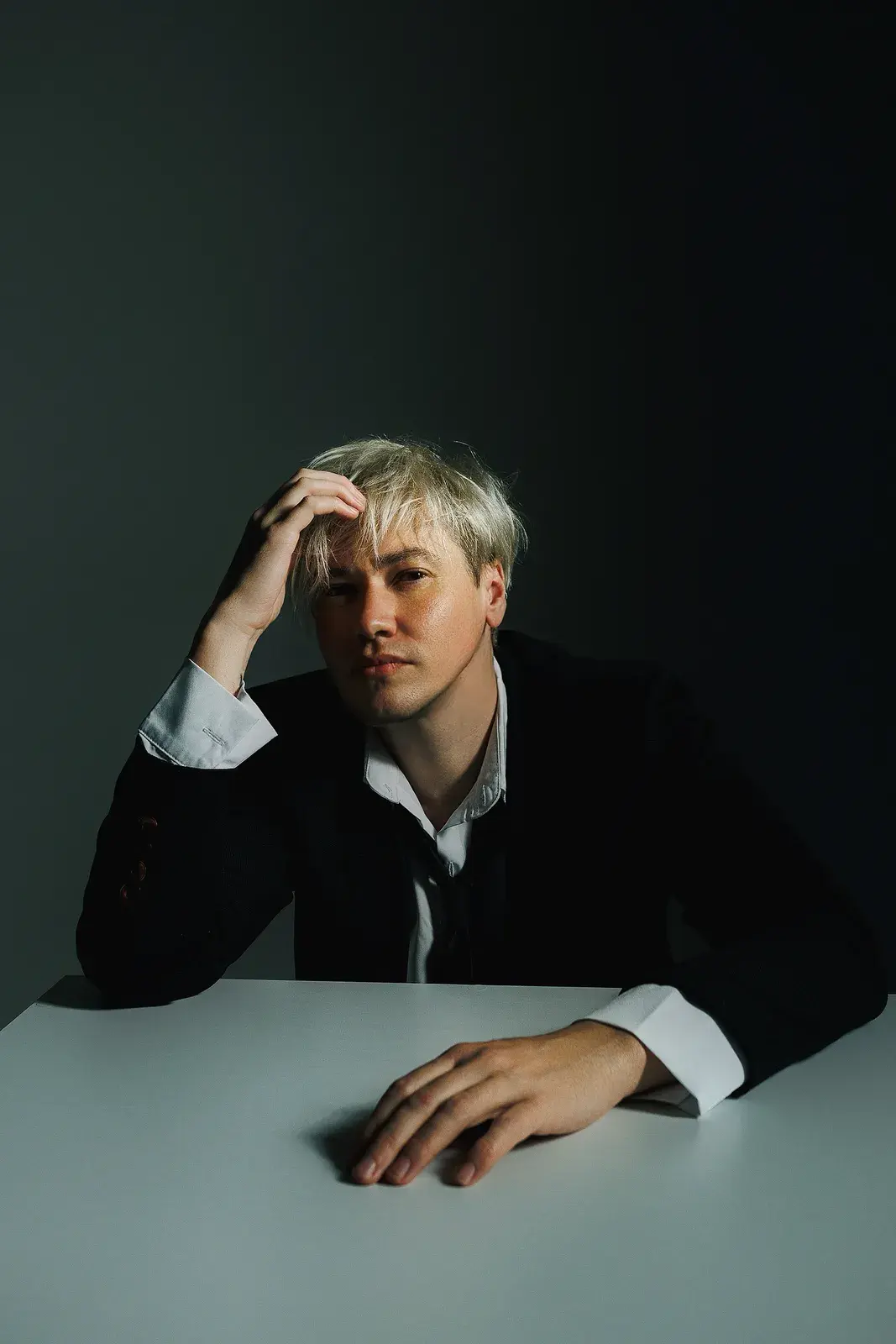
Denis Moretti
A spotlight conversation with the writer behind Coffin Couture.
Spotlight Interview
Denis Moretti
Can you tell us about the script you submitted, and the challenges you faced while writing it?
Coffin Couture is a dark comedy about someone trying to modernize probably the most traditional industry imaginable. Death.
The idea I wanted to play with was actually pretty simple: we live in a world where everything can become a trend. You find the right packaging, make it look good, sell it fast, make some money and move on to the next thing.
So what happens when someone tries to do exactly that with death?
That’s basically where my main character starts. He sees this incredibly old, traditional industry and thinks: this just needs better branding. And, obviously, there’s money to be made.
The problem is that behind all those traditions there’s something much older and stranger than he expects. Rituals, secrets, superstition and, in this story, actual magic. He walks into it thinking he understands the business and slowly realizes he doesn’t understand the thing he’s selling at all.
I really liked that contrast: this shiny, modern, slightly plastic world that looks great but has very little underneath it, meeting this ancient mystical world that has everything underneath it and absolutely no interest in looking good.
That was also the tricky part to write. I wanted it to be funny without turning death itself into the joke. And I wanted the supernatural side to actually feel mysterious and a little scary, rather than just becoming part of the comedy.
Basically, I wanted to take a guy who thinks anything can be packaged, branded and sold and introduce him to the one thing that really doesn’t care about his business plan.
Can you tell us about your background and how you got started in screenwriting?
My background is actually in theatre. I have a degree in theatre directing, so storytelling, characters and working with actors were part of my life long before I started calling myself a screenwriter.
Professionally, though, I really got into screenwriting through commercial and audiovisual work. For years, I’ve been writing everything from documentaries and web series to branded films and commercials. So I wrote A LOT. And honestly, I think that became my real screenwriting school.
Commercial work teaches you to be very practical about writing. You have a deadline, a budget, a client, a production team and at some point, someone actually has to shoot what you wrote. You learn pretty quickly that a brilliant scene that nobody can make isn’t always that brilliant.
But somewhere along the way, I realized that the part I enjoyed most was always the story itself. Creating characters, building worlds, finding some strange premise.
That gradually pushed me toward fiction and screenwriting as something more personal. I wanted to write stories where the starting point wasn’t a brief or a product, but simply an idea I couldn’t stop thinking about.
I still work between those two worlds today. Theatre gave me a foundation in character and performance, commercial work taught me discipline and how to think about an audience, and fiction gives me the space to be stranger, take risks and occasionally write things like Coffin Couture. Which is probably a good example of what happens when nobody gives me a brief.
What's your writing process like? How do you go about creating characters and developing a story?
My starting point is usually just one question: “What if…?”. I can literally be lying in bed before falling asleep and suddenly start thinking about two completely unrelated things and what would happen if I put them together. Like, “What if your new boss was suddenly a stray dog?” And then, unfortunately, I have to find out.
I’ve never been particularly drawn to very serious genres. I love bringing myths, legends, mysticism and supernatural things into stories, and then wrapping all of that in comedy or satire. So somehow I keep ending up with dark comedies.
I think dark comedy actually reflects the world we live in surprisingly well. Reality itself can be absurd, funny and terrifying at exactly the same time. And comedy gives us permission to laugh at things we probably want to laugh at, but don’t always feel we’re allowed to in real life.
Once I have that “What if?”, I start looking for the character who would have the worst possible time inside that idea. What do they want? Why do they want it? And what could happen that would completely destroy their understanding of how the world works?
From there, the story usually starts growing on its own. I build the structure, develop the characters and keep asking more “what if?” questions until I’ve created enough problems for everyone. Then comes the slightly less romantic part: rewriting everything until it actually works.
What do you think is the most important element of a great screenplay?
For me, the most important thing is probably what the writer personally brings into the story.
You can learn structure, dialogue, pacing, all the technical things and obviously, they matter. But I think what makes a screenplay really interesting is the combination of your own experience, everything you’ve watched and read, and all those very specific things you’re personally obsessed with.
I watch a lot of films, and I think having a huge visual and cultural library somewhere in your head is incredibly important. Not because you want to copy something you’ve seen, but because eventually all those influences mix together with your own experiences and turn into something new.
And then there are your personal preferences. I know, for example, that sooner or later I’ll probably find a way to bring mysticism, myths or legends into a story. I’m fascinated by them. Someone else might be obsessed with family dynamics, technology or politics. I think those recurring interests are what slowly create your voice as a writer.
So for me, a great screenplay isn’t necessarily about finding an idea nobody has ever had before. It’s about telling a story in a way that could only really come from you.
How do you feel about the current state of the film industry and the role of screenwriters in it?
I think what worries me most about the film industry right now is how artificial everything is starting to feel.
We shoot more and more against green screens, replace real environments with CGI, create images that are technically perfect but sometimes feel strangely empty. And now the same thing is happening with writing. Scripts, ideas, dialogue, all of it can be generated with AI. And honestly, you can often feel it.
I’m not against technology. It can be an amazing tool. What worries me is what happens when the tool starts replacing the person behind the story. For me, the whole point of storytelling is that one human being has something inside them (an experience, a fear, an obsession, a stupid thought they had at three in the morning) and somehow manages to share it with another human being. That’s the magic of it. And I really don’t want us to lose that.
That’s also why I think screenwriters are becoming more important, not less. A screenwriter brings something that shouldn’t be polished away: personality. Your weird interests, your memories, your sense of humor, the things you’re afraid of, the things only you find funny. All of that makes a story feel alive.
It’s funny because Black Mirror has been talking about exactly this kind of relationship between people and technology for years. We watched it thinking, “Wow, what a terrifying future.”
And now sometimes I look at the industry and think… okay, maybe we should have watched it as a warning, not a tutorial.
How do you approach writing for different genres and audiences?
I think my education and simply watching a ridiculous amount of films help a lot. But I also really love experimenting, so moving between genres has never scared me that much. If anything, that’s usually the fun part.
Do I create a detailed portrait of the audience before I start writing? Yes… but without going crazy about it. Sometimes just spending time on the social media tells you much more than a twenty-page audience analysis. You start seeing what people talk about, what they find funny, what annoys them, what they’re obsessed with right now.
I also try to go to as many film festivals as I can. Honestly, talking to people there is just as important. Writers, filmmakers, audiences, random people you meet in a queue for coffee… you get a sense of what people are thinking about right now and what kind of stories they’re hungry for.
And I think that matters because audiences change. Culture changes. Humor changes incredibly fast. You can’t understand all of that sitting alone in a room and studying statistics.
So if I had to give one piece of advice about understanding your audience, it would be very simple: talk to people. For a writer, it might be the best research you can do.
How do you handle feedback and criticism?
I used to take criticism pretty personally. I think most creative people understand that feeling. Whatever you make feels like a small piece of yourself. You spend months living with an idea, put something very personal into it, finally show it to the world. Fnd then someone comes along and tells you exactly what they don’t like about it. Of course it can hurt.
But work and experience have taught me to separate criticism from hate, and useful feedback from someone simply trying to hurt you. Those are very different things. And the good news is: you get to choose what you listen to.
Criticism and feedback will always be there. I don’t think creativity can really exist without them. Sometimes someone notices a problem you were completely blind to, and that can make your work much better. Sometimes you disagree, and that’s fine too. Not every note has to become a rewrite.
And even really bad criticism can be useful in a different way. We’re writers. Everything is material. So take what helps you, ignore what doesn’t and if someone writes something particularly terrible about your work, remember it. They might make a great character in your next script.
Can you talk about any upcoming projects or collaborations you're excited about?
I’m currently working on a new screenplay inspired by some of the darker and more mysterious legends of France. The idea is to bring those old stories into the present and imagine that they never really disappeared. They’re still here, quietly affecting our lives, but we just don’t notice it at first.
One thing I really want to play with is our idea of who the hero is and who the villain is. We’re so used to ancient forces, strange creatures and old magic being the threat in stories. But what if we’ve misunderstood them? Maybe the ancient things aren’t trying to destroy us. Maybe they’ve been trying to protect us all along.
I love the idea that these enormous, ancient forces could look at us, with all our technology, confidence and very modern problems. And still see these tiny, slightly lost humans who occasionally need saving.
How do you see the role of screenwriting evolving in the future?
I think screenwriting is going to become both easier and harder. Easier, because technology can already help with research, structure, translation, visualization. Basically all the technical parts of developing an idea. And I’m sure those tools will become much more powerful.
But harder, because when everyone has access to the same tools, having the tools stops being interesting.
So I think the role of the screenwriter will shift more and more toward having an actual point of view. Your experiences, your strange interests, your sense of humor, the people you’ve met, the places you’ve been, the things you’re afraid of. All the messy human stuff that makes one writer different from another.
Maybe in the future, technically perfect scripts will be incredibly easy to produce. But “technically perfect” has never been the reason I fell in love with a film. I want to feel that there was a person behind it. And maybe that will become one of the most valuable things a screenwriter can offer. Not perfection, but personality.
What advice would you give to aspiring screenwriters?
Don’t be afraid to write the story you really want to write. You never really know who might need that story.
A story can become an answer to a question someone has been carrying around for years. It can make someone feel understood when they thought nobody else would understand them. And sometimes, at the darkest moment in someone’s life, a film can genuinely help them get through another day.
So write your story anyway. Don’t be afraid. Somewhere out there, the story you’re scared to tell might be exactly the story someone else needs to hear.
Curtain Call
More Voices From the Spotlight
Meet the other filmmakers of this season, then bring your own story to Barcelona.